



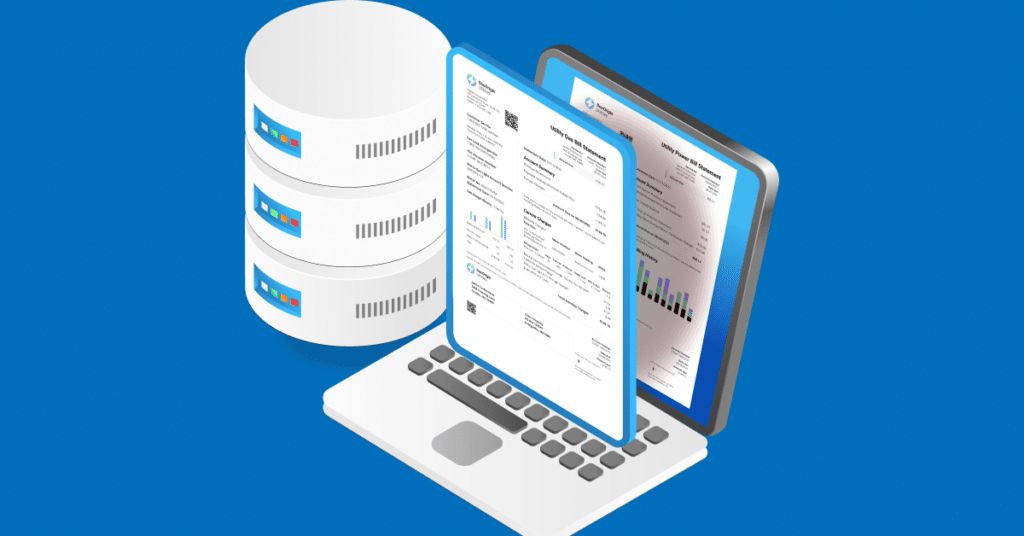
In many organizations, document generation begins as a natural extension of the ERP system. It handles invoices, purchase orders, statements, and other operational outputs directly from transaction data. For a time, this approach works well because document requirements are relatively straightforward and closely tied to core business processes.
Over time, however, those requirements expand.
Documents start to serve a broader role across business operations. They incorporate more complex business rules, pull from multiple data sources, and must be delivered across a variety of formats and channels. At that point, document generation is no longer just an output function—it becomes part of how the business communicates and operates. This evolution is reflected in modern ERP document generation best practices, where document processes extend beyond a single system and contribute to a broader enterprise document infrastructure.
It’s helpful to distinguish this from other common document challenges. Improving document delivery or replacing a specific tool can address immediate needs, but they don’t fully resolve how document generation fits into the broader system landscape. What many organizations are now considering is a structural change. Instead of keeping document generation embedded within the ERP, they are moving toward a model where it operates as a separate, connected layer. The ERP remains the system of record, responsible for transactions and data integrity. The document platform takes on responsibility for how that data is assembled, formatted, and delivered. This approach aligns with evolving ERP document generation best practices, where systems are designed to work together while maintaining clear responsibilities within an overall enterprise document infrastructure.
In a decoupled model, the ERP provides structured data, while the document platform manages everything related to document composition. Templates, business rules, and formatting logic are defined outside of the ERP. Documents can be generated using inputs from one or more systems, not just a single source. Output can be delivered in multiple formats and through different channels, depending on the use case. This type of decoupled document architecture allows document generation to operate consistently across workflows, rather than being tied to a specific application or process. It also introduces flexibility. New document types can be added without modifying ERP configurations. Existing templates can be updated independently. And document workflows can evolve without requiring changes to core transaction systems. Organizations using platforms like DocOrigin can centralize document logic outside of ERP systems. This strengthens overall ERP output management while supporting a scalable enterprise document infrastructure.
A key part of this model is how document generation is accessed. Rather than relying solely on ERP-triggered processes or scheduled jobs, document platforms can expose functionality through web services. Support for REST and SOAP APIs allows applications, portals, and other systems to request document generation dynamically. This expands traditional ERP output management into a more flexible, service-based model and reflects modern ERP document generation best practices. Customer-facing applications can generate documents on demand. Internal systems can trigger document workflows based on events. Multiple platforms can share a common document service, rather than maintaining separate logic in each system. This service-based approach makes document generation more adaptable to different use cases across enterprise document infrastructure.
Another consideration is how document generation fits into the broader infrastructure. Organizations often operate across a mix of environments, including on-premise systems, cloud platforms, and hybrid architectures. A document platform needs to support that diversity rather than introduce new constraints. Platforms like DocOrigin are designed for multi-platform deployment, supporting Windows, Linux, AIX and IBMi installations. This allows document generation to align with existing infrastructure strategies rather than requiring architectural changes. Whether deployed on-premise or through a cloud-based model like DocOrigin Cloud, this flexibility supports a more resilient and scalable enterprise document infrastructure.
Separating document generation from the ERP also changes how document logic is managed. Templates, formatting rules, and output configurations can be centralized within the document platform. This makes it easier to maintain consistency across departments and applications, while also simplifying updates. Changes to documents—whether driven by business needs or regulatory requirements—can be made without modifying ERP configurations. This reduces dependency on ERP release cycles and supports more responsive ERP output management. At the same time, core systems remain stable. Transaction processing and data management are not affected by changes to document logic, which helps minimize risk.
As document volumes grow and use cases expand, scalability becomes a practical concern. A dedicated platform like DocOrigin is designed to handle both high-volume batch processing and real-time generation within the same environment. It can process large output workloads efficiently while also supporting on-demand requests. This supports a modern approach to document generation for any ERP or homegrown environments, where both performance and flexibility are required. It can also manage more complex document scenarios, such as combining multiple data sources into a single output or delivering documents across different channels in a consistent way.
Enterprise environments are becoming more interconnected. Data flows across multiple systems, and document requirements continue to grow in complexity. In that context, treating document generation as a separate architectural layer provides a more sustainable approach and reinforces strong ERP document generation best practices. The ERP continues to manage transactions and data. A dedicated document platform manages how that information is assembled and delivered. Each system plays a clear role, supporting a scalable enterprise document infrastructure. Over time, this separation makes it easier to adapt to new requirements, integrate additional systems, and support evolving business processes.
A decoupled document architecture separates document generation from core systems like ERP platforms. The ERP provides data, while a dedicated document platform handles formatting, logic, and delivery. This improves flexibility and scalability.
Separating document generation supports better ERP output management, allowing organizations to update templates, formats, and workflows without modifying ERP configurations or disrupting transaction processing.
Modern platforms should support REST and SOAP APIs to connect with ERP systems, applications, and external services. This allows documents to be generated dynamically and supports a more flexible enterprise document infrastructure.
Yes. Platforms like DocOrigin that are decoupled from the ERP layer can work with systems such as JD Edwards EnterpriseOne, while providing greater flexibility and scalability.